Real vehicles you can book
Tap a vehicle to see its photos, floorplan and live prices for your dates.
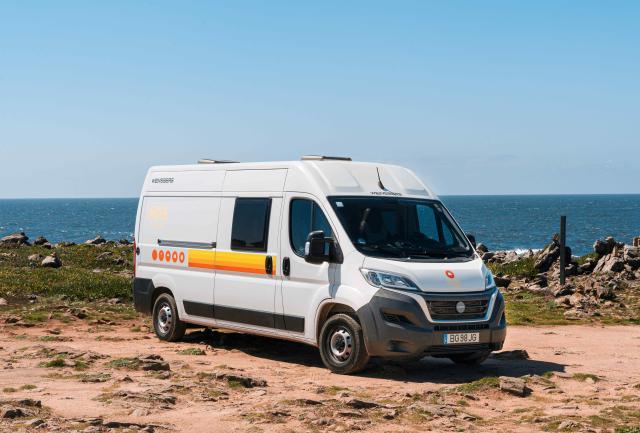
Indie Campers · Campervan · sleeps 2
Active Bunk Manual
Best for: Couples
Check dates & prices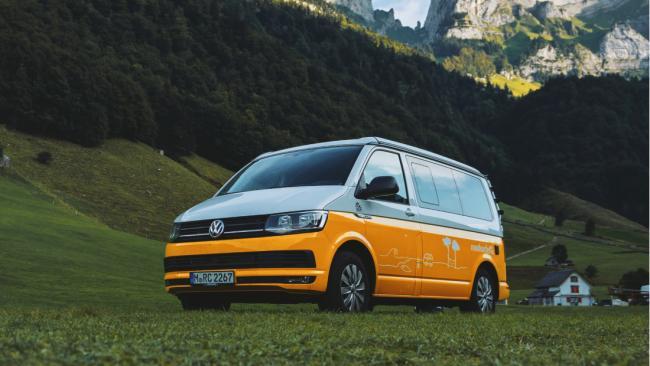
roadsurfer · Campervan · sleeps 2
Beach Hostel
Best for: Couples
Check dates & prices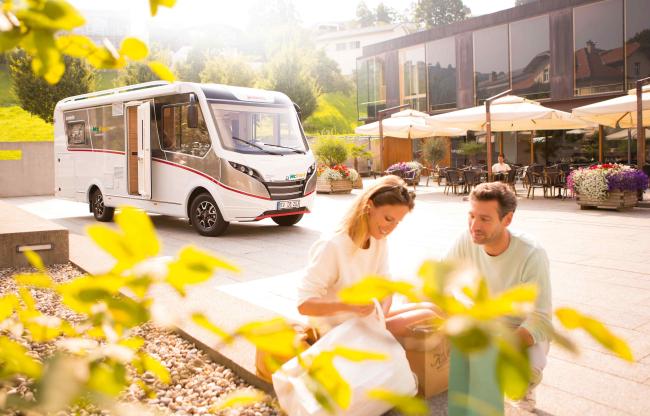
McRent Austria · Campervan · sleeps 2
Compact Luxury
Best for: Couples
Check dates & prices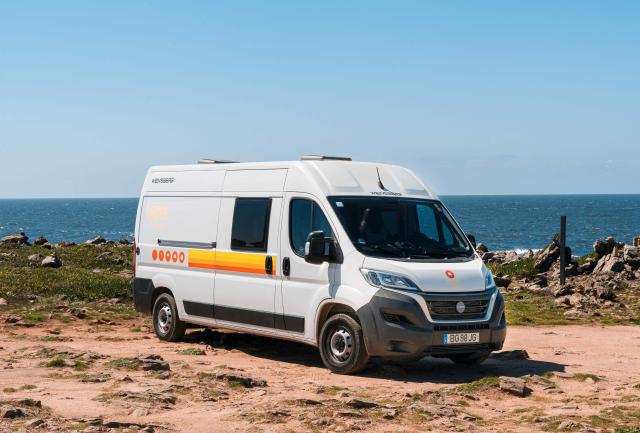
Indie Campers · Campervan · sleeps 2
Active Bunk Manual Select
Best for: Couples
Check dates & prices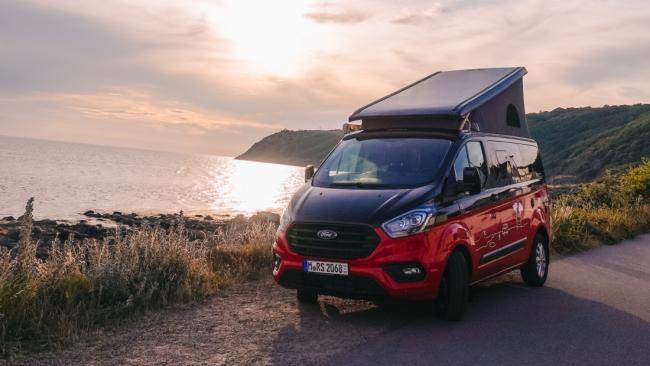
roadsurfer · Campervan · sleeps 2
Camper Cabin
Best for: Couples
Check dates & prices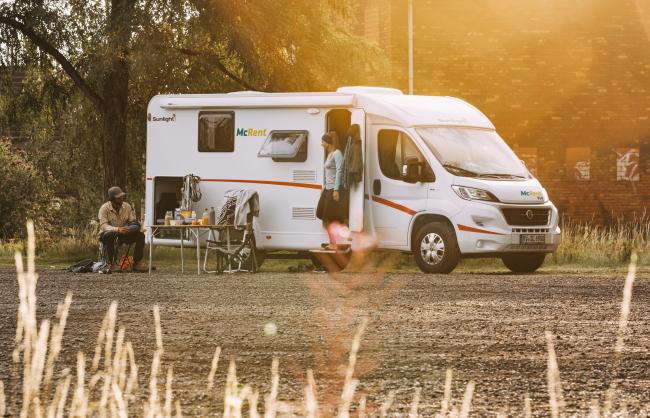
McRent Austria · Campervan · sleeps 2
Compact Plus
Best for: Couples
Check dates & pricesRental companies in Austria
We only list established fleets with their own vehicles. No peer-to-peer rentals and no paid rankings.

Indie Campers
A pan-European provider with modern, compact campervans and converted vans, good for narrow alpine roads. Digital check-in is standard.
View fleet & profile →
McRent Austria
Europe's largest motorhome rental specialist. Modern fleet of fully equipped semi-integrated and alcove motorhomes, with solid roadside support.
View fleet & profile →

roadsurfer
Specialises in compact Volkswagen and Mercedes campervans plus mid-sized motorhomes. Popular with couples and active travellers who want something agile.
View fleet & profile →
Where to pick up your campervan
Vienna & Eastern Austria
Your gateway to imperial palaces, Danube wetlands and the vineyards of Lower Austria.
- Vienna →
- Vienna Airport →
- Vienna Railway Station
- Vienna South
Salzburg & Upper Austria
Home to the Salzkammergut lake district, Hallstatt and baroque architecture.
Tyrol & Western Alps
Alpine territory with high peaks, winter sports resorts and high-altitude mountain passes.
Styria & Carinthia
Southern provinces known for warm swimming lakes, thermal spas and wine roads.
Austria campervan map: pickups and highlights
Dark blue dots are pickup locations. Tap any other dot to see the nearest pickup and a rough drive time.
Austria pickup city guides
More European guides: Albania · Belgium · Bosnia · Bulgaria · Croatia · Czech Republic · Denmark · Estonia · Finland · France · Germany · Greece · Hungary · Iceland · Ireland · Italy · Latvia · Liechtenstein · Lithuania · Luxembourg · Macedonia · Monaco · Montenegro · Netherlands · Norway · Poland · Portugal · Romania · Serbia · Slovakia · Slovenia · Spain · Sweden · Switzerland
Top tip
Depots in Vienna and Salzburg tend to sit on arterial roads or near transit links, not in the city centre. Check if yours offers out-of-hours key drop, and pick up your van mid-afternoon to dodge rush hour before hitting the motorway.
Trip cost calculator: fuel and campsites
Pick one of the road trips below or type your own distance to estimate fuel and overnight costs in EUR.
- Plan for (+20% detours)
- 504 km
- Fuel (66 litres)
- €110
- Campsites
- €250
- Fuel + campsites
- €360
Road fees: A 10-day digital vignette costs around €11.50 for vehicles under 3.5 tonnes. Mountain passes like the Grossglockner cost around €43 per transit.
You'll find diesel everywhere in Austria. Motorway service stations charge much more than pumps in regional towns, so fill up there instead. Estimates only; rental price, insurance and any mileage charges are shown in your quote.
Why tour Austria by campervan?
Few places reward road travel like Austria does. The road network is dense and well maintained, taking you from Vienna's grand baroque avenues to the hairpin bends of the Grossglockner High Alpine Road. Weather shifts fast here, so a campervan gives you the flexibility to move with it. If cloud rolls over the Tyrolean peaks, head south to Carinthia's turquoise lakes instead. Austrian campsites and Stellplätze (motorhome stops) are some of the cleanest and best equipped around, often with heated bathrooms, natural swimming ponds and direct access to hiking and cycling trails. Skip the train timetables and fixed hotel bookings. A campervan lets you linger at quiet trailheads, eat at rural Gasthöfe, and explore river valleys like the Wachau on your own schedule.
Which vehicle suits your group?
Compact Campervans — Couples and solo road-trippers
- Built on Volkswagen Transporter or Mercedes Vito platforms, easy on mountain roads.
- Pop-top roofs give you sleeping space while keeping the van low enough for standard parking bays.
- Manual or automatic, with low fuel consumption on motorways.
Panel Van Conversions — Couples seeking comfort or small families
- Six metres long, manoeuvrable, with an indoor washroom.
- Fixed rear double bed with plenty of garage storage for hiking gear and bikes.
- Fitted heating makes early spring and late autumn touring comfortable.
Semi-Integrated Motorhomes — Families and travellers prioritising interior space
- Coachbuilt bodies with a streamlined cab, a dedicated dining area and separate shower.
- Drop-down ceiling beds give you sleeping space without eating into daytime floor space.
- Watch bridge clearances and narrow village roads in historic alpine centres.
Alcove Motorhomes — Larger families and groups
- Over-cab double bed frees up living, cooking and storage space inside.
- Usually over 3 metres tall and can exceed 3.5 tonnes gross vehicle weight.
- Good payload, but take care in windy valley passes and low-clearance tunnels.
Best time to travel and weather
Spring (April to May)
- Lower valleys burst into blossom, and lakeside campsites start opening across Carinthia and Upper Austria.
- High-altitude passes stay closed by snow until mid-to-late May.
- Mild daytime driving and lighter traffic, outside public holiday weekends.
Summer (June to August)
- High alpine roads, including the Grossglockner and Silvretta, are fully open to motorhomes.
- Warm lakes mean water sports are popular, so book lakeside campsites months ahead.
- Afternoon thunderstorms are common, so take care on steep switchbacks.
Autumn (September to October)
- Stable weather, golden larch forests and wine harvest festivals in Styria and Lower Austria.
- Alpine passes start closing towards late October, depending on early snowfall at altitude.
- Cooler nights mean you'll need reliable on-board heating at higher elevations.
Winter (November to March)
- Ski touring and winter camping at resorts with drying rooms and gas hookups.
- Winter tyres are mandatory by law, and tyre chains are often needed on alpine roads.
- Sub-zero temperatures mean you need insulated waste tanks and constant heating to stop pipes freezing.
Classic Austria road trips
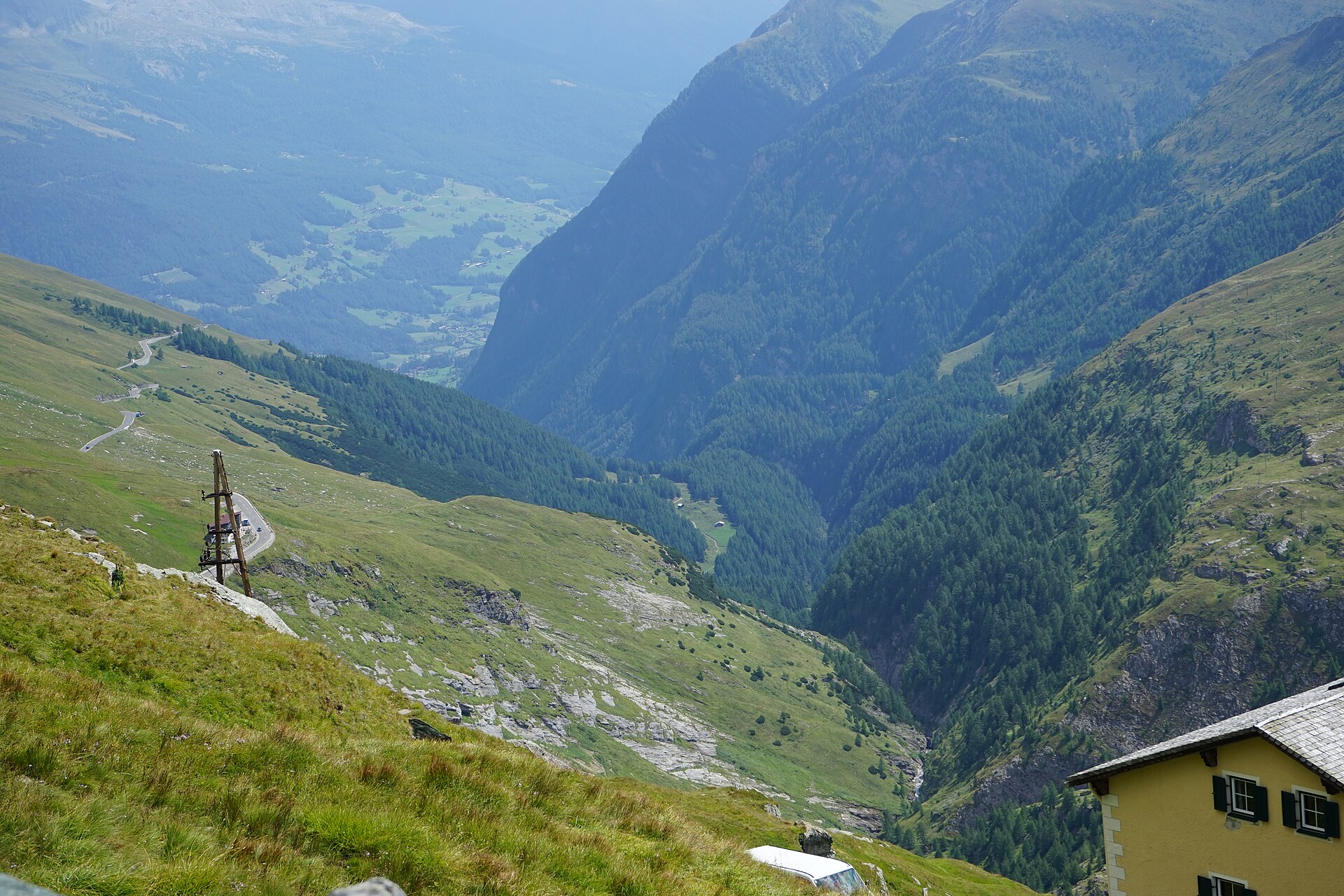
Cross the Hohe Tauern National Park on Austria's most famous panoramic road, from alpine meadows to glacial valleys in the south.
Day 1: Salzburg to Zell am See
Driving: 1h 30mSee: Liechtensteinklamm gorge and lakeside walking trails around Lake Zell
Overnight: Seecamping Zell am See
Day 2: Zell am See to Heiligenblut
Driving: 2h 15mSee: Grossglockner High Alpine Road, Kaiser-Franz-Josefs-Höhe viewpoint, and Pasterze Glacier
Overnight: Camping Nationalpark Grossglockner
Day 3: Heiligenblut to Lienz
Driving: 0h 50mSee: Möll Valley views, Lienz's historic town square, and the jagged Lienz Dolomites
Overnight: Camping Falken Lienz
Day 4: Lienz to Mittersill via Felbertauern
Driving: 1h 15mSee: Felbertauern alpine tunnel road and the National Park Worlds museum in Mittersill
Overnight: Campingplatz Schlossberg Grossvenediger
Day 5: Mittersill to Salzburg
Driving: 1h 45mSee: Krimml Waterfalls (Europe's highest) and the Gerlos Alpine Road descent
Overnight: Camping Panorama Stadtblick Salzburg
Must-see
- Kaiser-Franz-Josefs-Höhe visitor centre, overlooking the Pasterze Glacier
- Fuscher Törl memorial viewpoint, 2,428 metres up
- Krimml Waterfalls cascading across three tiered drops
- Liechtensteinklamm gorge, with narrow walkways and a suspended staircase
Free stops
- Edelweissspitze summit lookout car park, the highest point on the pass you can drive to
- Pasterze glacier educational trail path
- Lienz historic main square pedestrian zone
Before you go
- Use low gear on the descent from Hochtor. It saves your brakes from overheating.
- Buy your Grossglockner toll ticket online beforehand so you can use the automated lanes.
- Check the weather webcams at dawn. Cloud can drop visibility on the pass to near zero.
Where to stay overnight
- Wild camping and free overnight stops are banned in most Austrian states, especially Tyrol, Salzburg, Vienna and Lower Austria.
- Fines for illegal wild camping in nature reserves, national parks and forests can reach €10,000, depending on the state.
- Stellplätze (designated motorhome stops) are everywhere, with pay-and-display overnight parking, fresh water and waste disposal.
- Official campsites (Campingplätze) are well kept, usually with heated bathrooms, laundry, electric hookups and on-site bakery deliveries.
- In Carinthia, you can only stay overnight at official campsites. Camping in public car parks or on roadside verges is illegal.
- Farm-stay schemes like 'Schau aufs Land' offer legal 24-hour stopovers at organic farms, vineyards and local producers for an annual membership fee.
- Use apps like park4night and Camping.info to find legitimate municipal Stellplätze and check height restrictions or local overnight rules.
Driving rules and road quirks
- Drive on the right, overtake on the left.
- Motorhomes up to 3.5 tonnes follow normal car speed limits: 50 km/h in towns, 100 km/h on rural roads, 130 km/h on motorways, unless signs say otherwise.
- Motorhomes over 3.5 tonnes have lower limits: 50 km/h in towns, 70 or 80 km/h on rural roads, 80 km/h on motorways.
- Vehicles up to 3.5 tonnes need an ASFINAG toll vignette (digital or sticker) for Austrian motorways (Autobahn) and expressways (Schnellstraße).
- Motorhomes over 3.5 tonnes need an electronic transponder (the GO-Box) for distance-based tolling before joining any motorway.
- Separate section tolls (Streckenmaut) apply on some mountain routes, including the Brenner Pass (A13), Tauern Motorway (A10) and Arlberg Tunnel (S16).
- Between 1 November and 15 April, you need winter tyres (minimum 4 mm tread for radials) in wintry conditions, and snow chains must be on board.
- The legal blood alcohol limit is 0.5 g/l (0.05%). Professional drivers and anyone who has held a licence under two years face a stricter 0.1 g/l limit.
- Some motorways (like the A12 in Tyrol and A10 in Salzburg) have IG-L speed limits that drop to 100 km/h to cut emissions. Speed under IG-L and you'll face much heavier fines.
- Carry a hi-vis vest for every passenger, a warning triangle, and a sealed, in-date first-aid kit.
Estimated Touring Budget for Austria
Austria's roads and campsites are kept to a high standard, and that shows in average travel costs.
| Campsite pitch (2 adults + van, peak season) | €35 to €65 per night |
|---|---|
| Municipal Stellplatz (motorhome stopover) | €12 to €25 per night |
| 10-day digital ASFINAG vignette (vehicles ≤ 3.5t) | roughly €11.50 |
| Grossglockner High Alpine Road day toll | roughly €43 per car/campervan |
| Brenner Motorway section toll (A13) | roughly €11 per single transit |
| Standard meal at an alpine Gasthof (per person) | €18 to €30 |
| Fresh water & waste disposal station at Stellplatz | €1 to €2 (often coin-operated) |
Navigating Borders and Alpine Passes
Austria borders eight European countries within the Schengen Area, so crossing borders is easy. Just drive carefully on the high mountain passes.
- Carry your passport at all times, even without permanent border posts. Spot checks happen often on the borders with Germany, Hungary and Slovenia.
- Passes like the Grossglockner, Timmelsjoch and Hahntennjoch have gradients over 12%. Use lower gears on descents to avoid brake fade.
- Give way to climbing vehicles on narrow single-track mountain roads where reversing bays are scarce.
- Check height and width limits before tackling high passes. Alcove motorhomes over 3 metres can hit overhanging rock.
- Major alpine roads usually close for winter from late October or early November until mid-to-late May.
Day 1: first-timer checklist
- Check the vehicle's exterior with the depot agent and photograph any scrapes, stone chips, or scuffs before you sign.
- Check if the motorhome's gross weight (GVW/zGG) is above or below 3.5 tonnes. This decides your toll method and speed limits.
- Check you've got the safety kit: hi-vis vests for everyone, a warning triangle, and a compliant first-aid kit.
- Test the living area with the technician: light the gas hob, check the fridge on all three power sources (12V, 230V, gas), and run the heating.
- Find the fresh water inlet, grey water dump valve, and toilet cassette release, and check you've got the right hose connectors.
- Buy a digital ASFINAG vignette online, or grab a sticker at the nearest petrol station, before you join any Austrian motorway.
- Keep your first drive under 80 km to reach your first campsite in daylight and get used to the vehicle.
Must-do and must-try in Austria
Must-Do Touring Highlights
- Drive the switchbacks of the Grossglockner High Alpine Road to stand opposite the Pasterze Glacier.
- Park beside Lake Wolfgang or Lake Hallstatt for a sunrise paddleboard or swim.
- Explore the cloisters and library at baroque Melk Abbey, overlooking the Danube.
- Take the cable car from Innsbruck city centre up into the Nordkette mountains.
- Soak in Carinthia's thermal baths after a day on the alpine ridge trails.
Must-Try Austrian Food & Drink
- Wiener Schnitzel: traditionally veal, served with potato-lamb's lettuce salad and lemon.
- Kaiserschmarrn: a fluffy shredded pancake with caramelised raisins, served with stewed plum compote (Zwetschkenröster).
- Tiroler Gröstl: a hearty pan of fried potatoes, cured bacon, beef and onions, topped with a fried egg.
- Kärntner Kasnudeln: Carinthian pasta pockets filled with curd cheese, potatoes and mint, drizzled with brown butter.
- Styrian Pumpkin Seed Oil (Kürbiskernöl): drizzle it over salads or pumpkin soup.
Alpine Outdoor Activities
- Hike the trails of the Hohe Tauern and Karwendel nature reserves.
- Cycle the paved, traffic-free Danube Cycle Path (Donauradweg) through the Wachau vineyards.
- Tackle via ferrata (Klettersteig) routes along the Dachstein limestone walls.
- Canoe or kayak the clear waters of the Drau river through Carinthia.
Local apps and emergency numbers
- Emergency number: 112 (European emergency services) or 133 for Austrian Police.
- Roadside breakdown: ÖAMTC (dial 120) or ARBÖ (dial 123).
- Useful app: ASFINAG 'Unterwegs' for live traffic, webcams, and buying your digital vignette.
- Campsite search apps: park4night, Camping.info, and Schau aufs Land for farm stopovers.
- Hookups use the standard European CEE 3-pin blue plug. Carry a 2-pin Schuko adapter too.
- Tap threads vary between sites, so carry a multi-thread screw adapter (1/2 inch and 3/4 inch).
- Cards are widely accepted, but keep cash for coin-operated showers, farm honesty stalls, and rural bakery deliveries.
Official live links
- Austrian National Tourist Office — Official national portal with regional guides, events, and outdoor itineraries.
- ASFINAG Motorway Authority — Official source for digital vignettes, section tolls, live traffic cams, and GO-Box rules.
- Grossglockner High Alpine Road — Current opening dates, hours, road conditions, and toll fees.
- ÖAMTC Motoring Club — Austrian automobile club with road reports, mountain pass status, and breakdown support.
- Camping.info Austria — Database of verified Austrian campsites with reviews and facility filters.
Austria campervan FAQs
Is wild camping allowed in Austria?
No. Free camping in motorhomes, campervans and tents is illegal across most Austrian provinces, especially in forests, nature reserves and farmland. Tyrol, Salzburg and Lower Austria ban overnight stays outside official campsites or Stellplätze, with heavy fines for breaking the rule.
Do I need a vignette for my campervan?
Yes, if you're driving on motorways (Autobahn) or expressways (Schnellstraße) in a vehicle up to 3.5 tonnes. Buy a 1-day, 10-day, 2-month or annual vignette online from ASFINAG or at petrol stations. Over 3.5 tonnes, you don't need a vignette, you need a GO-Box transponder instead.
Can I drive a 3.5-tonne motorhome on a standard licence?
Yes. A standard Category B licence from the UK or EU covers vehicles up to 3,500 kg maximum authorised mass. Over that, you'll need a Category C1 or C licence.
What are the winter tyre requirements in Austria?
Between 1 November and 15 April, Austrian law says cars and light commercial vehicles need winter tyres fitted if roads are snowy, slushy or icy. Tyres need the M+S or alpine symbol and at least 4 mm tread. You must also carry snow chains during this period.
What's the difference between a Campingplatz and a Stellplatz?
A Campingplatz is a full-service site with showers, toilets, electric hookups, dishwashing stations and recreation areas, good for longer stays. A Stellplatz is a basic overnight parking spot for self-contained motorhomes, often with pay-and-display machines and basic waste and water points, for stays of 24 to 48 hours.
Are section tolls included in the motorway vignette?
No. Section tolls (Streckenmaut) apply on major routes like the Brenner Pass (A13), Tauern Motorway (A10), and Arlberg Tunnel (S16). Pay these separately at toll booths or prepay via ASFINAG.
What is the IG-L speed limit on Austrian motorways?
IG-L stands for Immissionsschutzgesetz-Luft (Air Pollution Control Act). When pollution rises, overhead signs on some motorways (notably the A12 in Tyrol and A10 near Salzburg) drop the limit, usually from 130 km/h to 100 km/h. Fines for breaking an IG-L limit are much higher than normal speeding fines.
Can I drive large motorhomes through historic Austrian towns?
Many old town centres have tight streets, low archways and pedestrian zones where motorhomes can't go or aren't allowed. Park in a Park & Ride or motorhome bay outside the centre and walk, cycle, or take public transport in.
How does the Price Beat Guarantee work?
Find a lower price and we'll beat it. The quote must be for the same vehicle from the same supplier, with identical depots, dates and times, matching inclusions, mileage and excess options, and be live and verifiable before you book. Conditions apply — see our terms.