
Real vehicles you can book
Tap a vehicle to see its photos, floorplan and live prices for your dates.
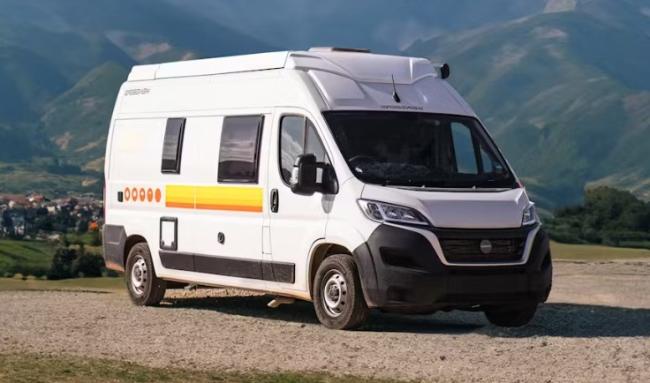
Indie Campers · Campervan · sleeps 2
Active Bunk
Best for: Couples
Check dates & prices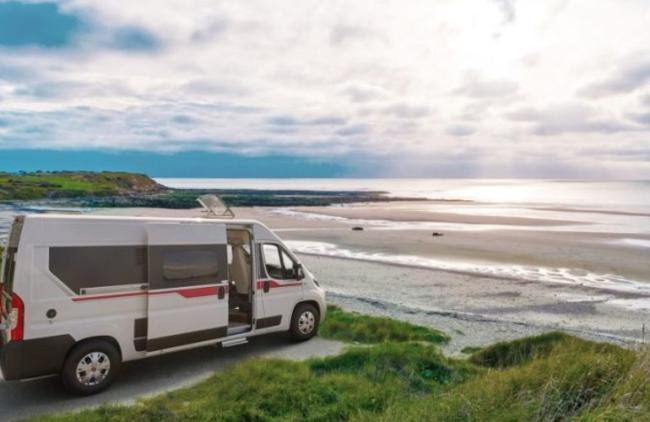
Avis Explore · Campervan · sleeps 2
Adventure - CamperVan - 2 pax
Best for: Couples
Check dates & prices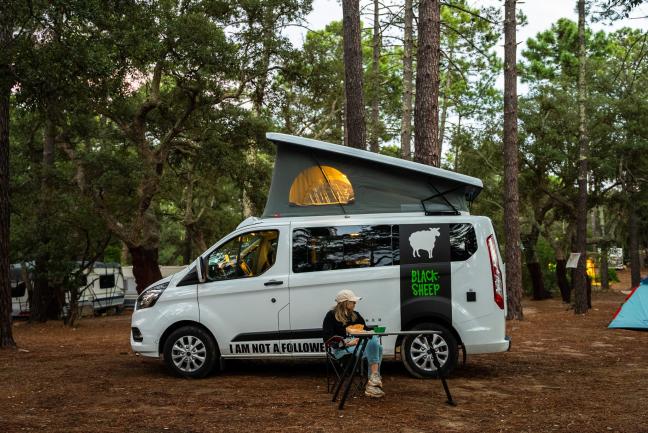
Blacksheep Campervan Rental · Campervan · sleeps 2
Baroudeur
Best for: Couples
Check dates & prices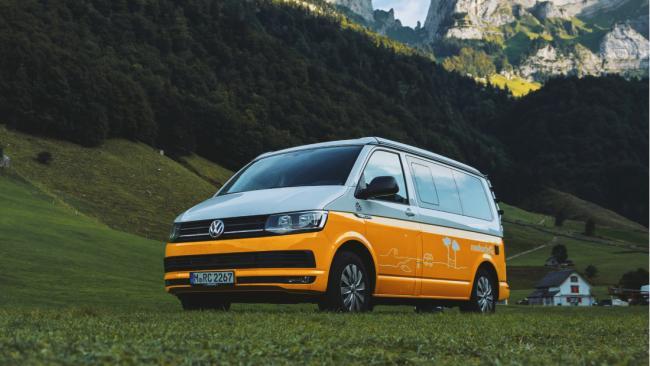
roadsurfer · Campervan · sleeps 2
Beach Hostel
Best for: Couples
Check dates & prices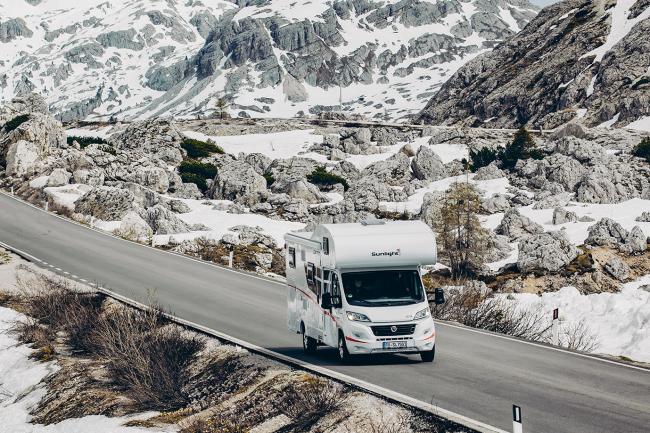
McRent France · Campervan · sleeps 2
Family Plus
Best for: Couples
Check dates & prices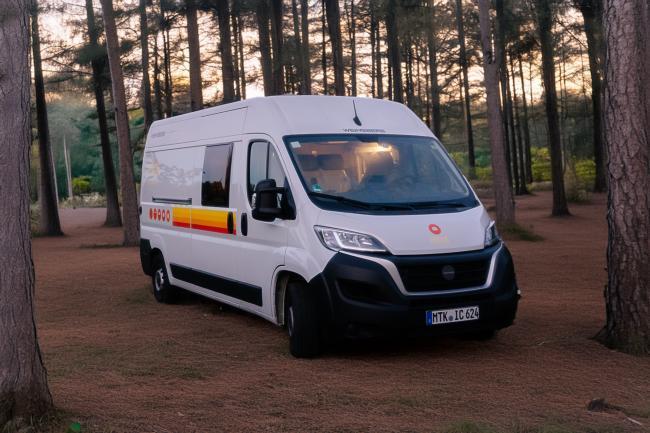
Indie Campers · Campervan · sleeps 2
Active Bunk 4 Auto
Best for: Couples
Check dates & pricesRental companies in France
We only list established fleets with their own vehicles. No peer-to-peer rentals and no paid rankings.
Avis Explore
A long-running French specialist with modern, fully equipped motorhomes and campervans at depots nationwide.
View fleet & profile →
Blacksheep Campervan Rental
Compact campervans and converted vans built for road trips and outdoor adventures.
View fleet & profile →

Indie Campers
A major European operator with practical campervans and semi-integrated motorhomes, with flexible pick-up near key transport hubs.
View fleet & profile →
McRent France
Europe's largest motorhome hire network, with young Dethleffs and Sunlight fleets from compact low-profiles to roomy family coachbuilts.
View fleet & profile →

roadsurfer
Modern, stylish compact campervans like Volkswagen Californias and Mercedes Marco Polos, great for cities and coastal trips.
View fleet & profile →
Where to pick up your campervan
Île-de-France & North
Gateway to northern Europe, with battlefields, Gothic cathedrals and Channel ports.
- Amiens →
- Calais →
- Chartres →
- Dieppe →
- Dunkirk →
- Evreux →
- Le Havre →
- Lille →
- Paris →
- Paris Airport →
- Paris CDG
- Paris Charles De Gaulle Airport
- Paris Orly Airport
- Paris ORY
- Pozieres →
- Rambouillet →
- Reims →
- Rouen →
Western France & Brittany
Granite coastlines, cider orchards, prehistoric standing stones and grand Loire châteaux.
South West & Atlantic Coast
Pine forests, big surf beaches, Dordogne river valleys and top wine estates.
Provence, Riviera & Occitanie
Mediterranean shores, Roman monuments, limestone gorges and old fortified citadels.
Auvergne-Rhône-Alpes & East
Alpine peaks, turquoise glacial lakes, volcanic ridges and top food towns.
Corsica
Wild Mediterranean island with granite mountains, dense maquis and turquoise bays.
- Ajaccio →
- Ajaccio (Corsica)
- Ajaccio Airport →
- Bastia →
- Bastia Airport →
France campervan map: pickups and highlights
Dark blue dots are pickup locations. Tap any other dot to see the nearest pickup and a rough drive time.
France pickup city guides
- Aix-en-Provence
- Ajaccio
- Amiens
- Angers
- Annecy
- Antibes
- Argens-Minervois
- Avignon
- Bastia
- Bergerac
- Béziers
- Biarritz
- Bordeaux
- Caen
- Calais
- Cannes
- Carcassonne
- Carnac
- Chamonix
- Chartres
- Cherbourg
- Colmar
- Dieppe
- Dijon
- Dunkirk
- Évreux
- Geneva
- Grenoble
- La Châtre
- La Rochelle
- Le Havre
- Le Mans
- Lille
- Lure
- Lyon
- Mâcon
- Marseille
- Metz
- Montceaux
- Montpellier
- Morlaix
- Nancy
- Nantes
- Nice
- Nîmes
- Nort-sur-Erdre
- Orléans
- Paris
- Pau
- Perpignan
- Poitiers
- Pozières
- Quimper
- Rambouillet
- Reims
- Rennes
- Roscoff
- Rouen
- Saint-Malo
- Saint-Raphaël
- Strasbourg
- Toulon
- Toulouse
- Tours
More European guides: Albania · Austria · Belgium · Bosnia · Bulgaria · Croatia · Czech Republic · Denmark · Estonia · Finland · Germany · Greece · Hungary · Iceland · Ireland · Italy · Latvia · Liechtenstein · Lithuania · Luxembourg · Macedonia · Monaco · Montenegro · Netherlands · Norway · Poland · Portugal · Romania · Serbia · Slovakia · Slovenia · Spain · Sweden · Switzerland
Top tip
Depots around Paris, Lyon and Nice are often in outer industrial zones, not central terminals. Get there by regional train (RER or TER) or taxi. Check your arrival matches depot hours too, many French depots close for lunch between 12:00 and 14:00.
Trip cost calculator: fuel and campsites
Pick one of the road trips below or type your own distance to estimate fuel and overnight costs in EUR.
- Plan for (+20% detours)
- 504 km
- Fuel (66 litres)
- €115
- Campsites
- €260
- Fuel + campsites
- €375
Road fees: Motorway tolls in France average €8 to €12 per 100km for Class 2 motorhomes. National routes are free if you'd rather skip them.
Diesel is usually 15 to 25 cents a litre cheaper at supermarket forecourts (Intermarché, Leclerc) than at motorway services. Estimates only; rental price, insurance and any mileage charges are shown in your quote.
Why choose France for a campervan holiday?
France is the gold standard for motorhome travel, thanks to over 6,000 communal and private Aires de Camping-Car. You can cross Atlantic coasts, Alpine passes, mediaeval bastide towns and top vineyards in a few hours' drive. Unlike countries that restrict overnight parking, France welcomes self-contained vehicles. France Passion lets you stay free on working farms, orchards and vineyards. Quiet routes départementales lead to markets, châteaux and remote villages. Local produce, fresh bread, cheese, wine, makes self-catering a joy. With depots at major airports and rail hubs, getting started is easy.
Which vehicle suits your group?
Compact Pop-Top Campervan — Couples, solo travellers and active duos who want nimble handling.
- Based on models like the VW California or Ford Nugget, usually under 2 metres tall to fit regular car parks and class 1 toll rates.
- Has a pop-up roof, twin gas burner, small compressor fridge and dining table.
- Usually no onboard toilet or shower, so you'll use campsite facilities or portable options.
Medium Converted Panel Van — Couples or small families who want full facilities in a manoeuvrable size.
- Built on a standard van chassis (Fiat Ducato or Peugeot Boxer), 5.4 to 6.4 metres long.
- Has a fixed double bed, a wet room with cassette toilet and shower, and a full galley kitchen.
- Easy to drive through rural villages and narrow coastal lanes, while staying self-sufficient.
Semi-Integrated (Low Profile) Motorhome — Couples wanting more space, or small families after comfortable cruising.
- Aerodynamic coachbuilt body on a light commercial cab, with good insulation and fuel economy.
- Has a permanent rear bed, electric drop-down ceiling bed, a roomy dining lounge and separate shower cubicle.
- Big rear garage for bikes, outdoor furniture and leisure gear.
Alcove (Overcab) Family Motorhome — Larger families or groups who need separate sleeping zones and maximum storage.
- Recognisable by the luton bed over the cab, giving permanent sleeping berths without losing daytime living space.
- Sleeps 4 to 6 with bunk beds or a rear transverse double, plus large wardrobes.
- Watch overhead clearance (often 3.1m or higher) and toll classifications.
Best time to travel and weather
Spring (April to May)
- Mild days, blooming countryside and few crowds outside school holiday weekends.
- Campsites and municipal aires start opening for the season, though mountain passes may still have snow.
- Good conditions for cycling the Loire Valley and touring Provence before the summer heat.
Summer (June to August)
- Long days and hot, dry weather across most regions, especially the south and inland valleys.
- Book coastal campsites and popular spots months ahead. Domestic holiday traffic peaks in late July and August.
- High mountain passes in the Alps and Pyrenees are fully open, with great hiking and wild scenery.
Autumn (September to October)
- Warm, golden weather, with quiet roads and empty beaches once the summer rush ends.
- Grape harvests across Bordeaux, Burgundy and Champagne bring lively festivals and a great touring atmosphere.
- Cooler evenings make campervan life comfortable, and you won't need to arrive early to find space at aires.
Winter (November to March)
- Cold, with persistent rain in northern lowlands and heavy snow in the Alps and central massifs.
- Many rural campsites and seasonal municipal aires close, so you'll need a winterised motorhome with heated tanks.
- Winter equipment rules (Loi Montagne) are mandatory in designated mountain departments from November to March.
Classic France road trips
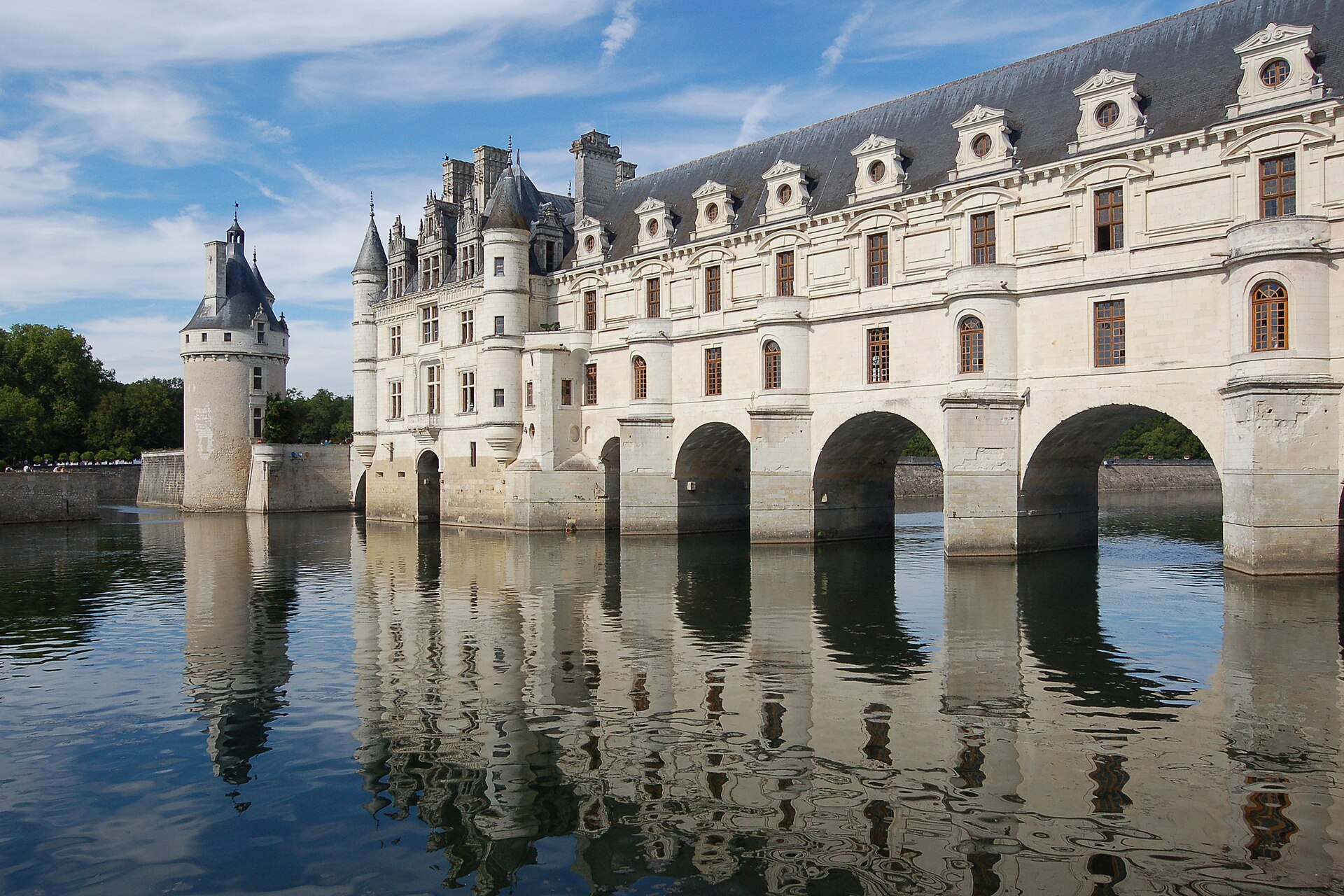
Follow the Loire through royal Renaissance estates, troglodyte wine cellars and quiet riverside villages.
Day 1: Tours to Amboise & Chenonceaux
Driving: 1h10See: Château d'Amboise, Leonardo da Vinci's Clos Lucé and the arches of Château de Chenonceau over the Cher.
Overnight: Camping Municipal des Châteaux, Seillac
Day 2: Chenonceaux to Blois & Chambord
Driving: 1h20See: Royal Château de Blois, and the huge Renaissance grounds and double-helix staircase at Château de Chambord.
Overnight: Aire Camping-Car Park de Chambord
Day 3: Chambord to Cheverny & Chaumont
Driving: 1h00See: Classical architecture at Château de Cheverny and contemporary gardens at Chaumont-sur-Loire.
Overnight: Aire de Camping-Car de Chaumont-sur-Loire
Day 4: Chaumont to Villandry & Azay-le-Rideau
Driving: 1h30See: The geometric Renaissance gardens at Villandry and the water-mirrored Château d'Azay-le-Rideau.
Overnight: Camping Le Sabot, Azay-le-Rideau
Day 5: Azay-le-Rideau to Chinon & Saumur
Driving: 1h15See: The mediaeval fortress at Chinon, troglodyte caves along the cliffs and the equestrian town of Saumur.
Overnight: Aire Communale de Saumur
Must-see
- Château de Chambord roofline and double-helix staircase
- Château de Chenonceau arched gallery spanning the river
- Renaissance ornamental kitchen gardens of Villandry
- Underground troglodyte wine cellars of Vouvray and Chinon
Free stops
- Public viewpoint of Château de Chambord from across the grand canal
- Riverfront promenade along the Vienne in medieval Chinon
- Loire à Vélo riverside parking spots near Montsoreau
Before you go
- Buy a pass if you're visiting several châteaux, it cuts entrance costs.
- Take the D951/D952 along the riverbanks instead of the bypass highways.
- Many château car parks have free daytime motorhome spaces if you've got an entry ticket.
Where to stay overnight
- Wild camping is generally banned in France: on coastlines, in national parks, near classified historical monuments, and anywhere local bylaws (arrêtés municipaux) forbid overnight vehicle stays.
- Aires de Camping-Car offer legal overnight parking for motorhomes, usually €8 to €18 a night, including fresh water, waste dump and sometimes electricity.
- Camping-Car Park is Europe's largest automated network of barrier-controlled aires. You access it with a reusable RFID 'Pass'Étapes' card, which you top up via their app.
- Join France Passion and your self-contained campervan can stay free for up to 24 hours at over 2,000 working vineyards, orchards, cheese dairies and farms. You'll need the annual membership booklet or app.
- Municipal campsites (Campings Municipaux) are great value. Expect spacious grassy pitches, clean shower blocks and friendly local service for modest nightly rates.
- Private full-facility holiday campsites range from 1 to 5 stars, with swimming complexes and restaurants. Many set minimum stay requirements in July and August.
- For finding pitches, services and water points across France, use Park4Night, Camping-Car Park and Campercontact.
Driving rules and road quirks
- Drive on the right and overtake on the left. At unmarked junctions, give way to vehicles approaching from the right ('priorité à droite').
- For motorhomes under 3.5 tonnes: 50 km/h in built-up areas, 80 km/h on two-lane roads, 110 km/h on dual carriageways, and 130 km/h on motorways (110 km/h when wet).
- Vehicles over 3.5 tonnes GVW are limited to 80 km/h on rural roads, 90 km/h on dual carriageways and 110 km/h on motorways. You must display rear speed discs.
- Most French motorways charge tolls. Compact campervans under 2m count as Class 1; most motorhomes under 3.5t and 2 to 3m high fall into Class 2.
- You need a Crit'Air windscreen sticker to enter Low Emission Zones (ZFE) in cities including Paris, Lyon, Marseille, Toulouse, Nice and Strasbourg.
- Motorhomes over 3.5 tonnes must display 'Angles Morts' (blind spot) warning stickers on both sides and the rear.
- The legal blood alcohol limit is 0.5 g/l (0.05%). Gendarmerie run regular roadside breath tests.
- From 1 November to 31 March, the Loi Montagne requires winter tyres (3PMSF rated) or snow chains in 34 mountainous departments, covering the Alps, Pyrenees, Massif Central, Vosges and Jura.
- You need a valid national driving licence held for at least one year. Non-EU licence holders should also carry an International Driving Permit (IDP).
- Radar detectors and GPS devices showing exact speed camera locations are illegal. Your navigation system should only show general hazard zones.
Typical Campervan Travel Costs in France
Daily costs in France depend on whether you stick to motorways and commercial parks, or use municipal aires and back roads.
| Campsite pitch (2 adults + pitch, high season) | €25 to €55 per night |
|---|---|
| Municipal campsite pitch (Campings Municipaux) | €14 to €25 per night |
| Dedicated Aire de Camping-Car (services incl.) | €10 to €18 per night |
| Diesel fuel (per litre, typical) | €1.65 to €1.85 |
| Motorway toll (Paris to Lyon, Class 2 motorhome) | Roughly €60 to €70 |
| Crit'Air environmental windscreen badge | Roughly €4.61 (incl. international postage) |
| LPG (GPL) bottle refill or pump autogas | €0.95 to €1.15 per litre |
Borders, Mountain Passes, and Island Ferries
France sits at the heart of the Schengen Area, so crossing into neighbouring countries is easy. Island and mountain routes need a bit more planning though.
- Border Crossings: There are usually no passport checks on land borders with Spain, Italy, Switzerland, Germany, Belgium and Luxembourg, though spot checks do happen.
- Switzerland Transit: Driving into Switzerland means buying an annual motorway vignette (CHF 40) at the border for vehicles up to 3.5 tonnes.
- Channel Ports: Ferries run from Dover to Calais and Dunkirk, and the Eurotunnel shuttle from Folkestone takes vehicles of all sizes, with frequent crossings.
- Corsica Ferries: Vehicle ferries link mainland ports (Toulon, Marseille, Nice) to Bastia and Ajaccio with Corsica Ferries and Corsica Linea.
- Alpine Tunnels: Tunnels like Mont Blanc and Fréjus charge steep one-way and return tolls. Check height and vehicle class before you go.
- Mountain Passes: Alpine and Pyrenean passes like Col du Galibier and Col du Tourmalet close all winter, reopening between late May and early June.
Day 1: first-timer checklist
- Go through the handover inspection carefully. Photograph any existing scratches, windscreen chips or interior wear before you sign.
- Get depot staff to show you the water heater, cabin heating (gas or diesel), fridge power switching and 12V control panel.
- Check you've got the mandatory safety kit: hi-vis vests for everyone, a warning triangle and a spare bulb kit.
- Find the fresh water inlet, grey waste drain valve and toilet cassette housing, and check you have the right hose adapters.
- Head to a supermarket (E.Leclerc, Carrefour or Intermarché) for basic food, bottled water and toilet chemicals.
- Supermarket fuel is almost always cheaper than motorway services, so fill up before you hit the highway.
- Keep your first drive short, no more than 1 to 2 hours, so you get used to the vehicle's size and reach your first campsite before dusk.
- Level the van on arrival using plastic ramps. This makes for comfortable sleeping and keeps absorption fridges working properly.
Must-do and must-try in France
Must-Do France Campervan Highlights
- Wake up among the vines at a France Passion farm stay and taste the wine straight from the producer.
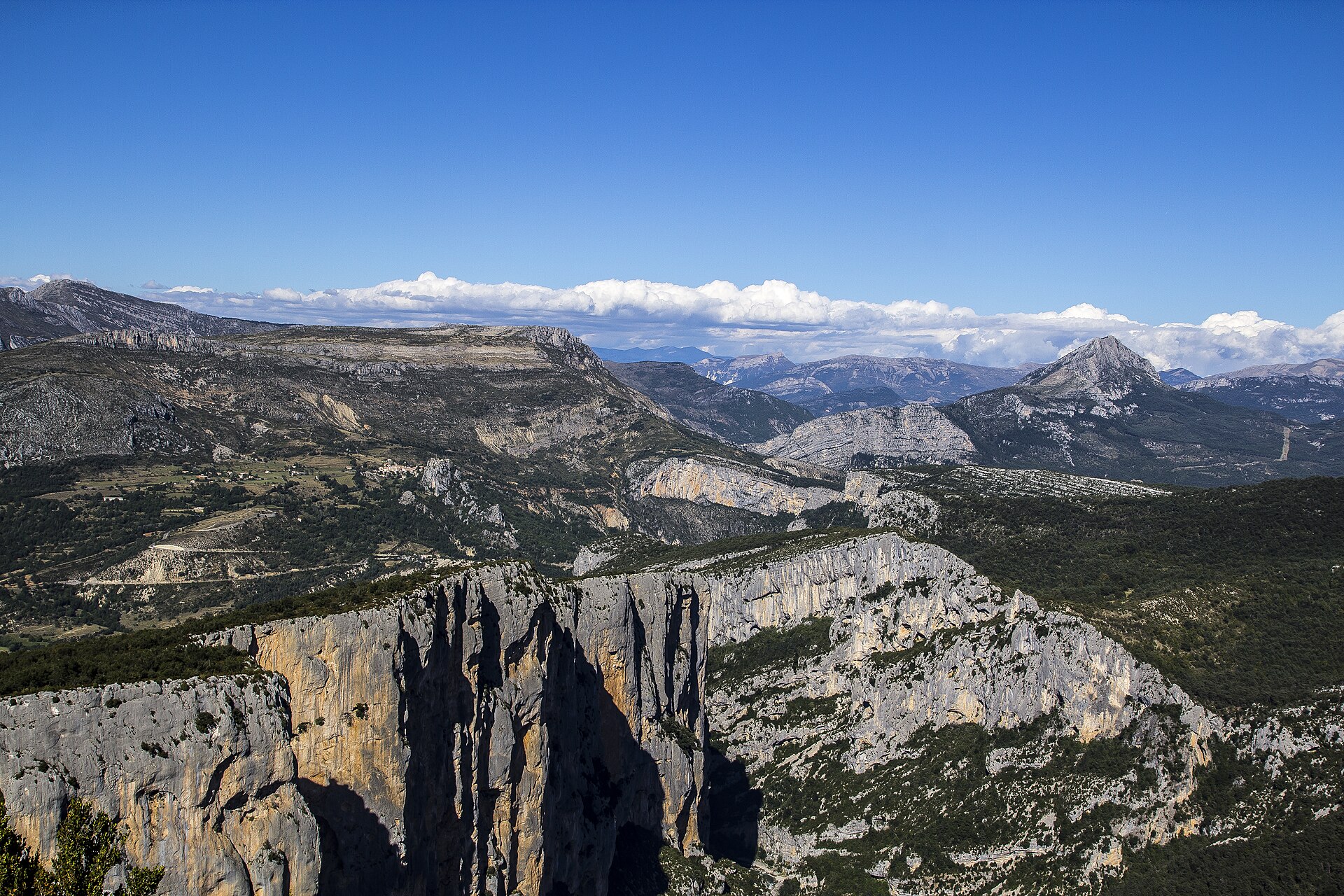
- Drive the rim road around the turquoise Gorges du Verdon, stopping at viewpoints perched like eagle nests.
- Watch the fast Atlantic tide cut off the causeway at Mont-Saint-Michel from a nearby coastal campsite.
- Take on famous Tour de France mountain routes in the Pyrenees or French Alps in your motorhome.
- Cycle the Loire à Vélo paths straight from your pitch, past grand royal châteaux.
Must-Try Regional Food & Drink
- Warm baguettes and viennoiseries, fresh from the village boulangerie each morning.
- Savoury galettes de sarrasin (buckwheat pancakes) with crisp artisanal cider in Brittany.
- Cassoulet stew with duck confit, pork sausage and white beans in Castelnaudary or Carcassonne.
- Cheese boards of Comté, Reblochon, Roquefort and Camembert, picked up at the weekly outdoor markets.
- Provençal ratatouille, tapenades and fresh goat cheeses with wild herbs, eaten on sunny village squares.
Practical Campervan Hacks for France
- Keep €1 and €2 coins in the dashboard console. Older municipal service points (bornes) need coins for fresh water.
- Carry a threaded 'universal' water tap connector as well as standard screw fittings. French push-button taps come in different sizes.
- Avoid driving through historic village centres. Watch for signs pointing to motorhome parking (parking conseillé camping-cars) on the edge of town.
- Use the laundry facilities on forecourts outside major supermarkets while you do your shopping.
- Download offline maps so you don't lose directions in deep valleys or mountain areas.
Local apps and emergency numbers
- European emergency number: 112 (police, medical or fire, with multilingual operators).
- SAMU (medical emergency): 15; Police Secours: 17; Sapeurs-Pompiers (fire and rescue): 18.
- Park4Night: the go-to crowdsourced app for aires, wild spots, campsites and water points across France.
- Camping-Car Park app: check real-time space availability and book barrier-controlled aires.
- Crit'Air certificate: order your windscreen sticker well ahead of travel via the official government portal.
- A two-pin European electrical adapter (CEE 17 blue plug) and extension cable for mains hookups.
- Keep reflective safety jackets inside the cabin, not the rear boot, so you can reach them without stepping outside.
- Sanitary waste chemicals (liquid or dissolvable pods) for your cassette toilet.
Official live links
- France Tourism Official Portal — Travel inspiration, regional culture and visitor guidance from the national tourist board.
- Crit'Air Official Vignette Ordering — The only official French government site for buying clean air vignettes without broker fees.
- Bison Futé Road Traffic Information — Official government road conditions, traffic forecasts and roadworks updates.
- ASFA French Motorways Portal — Official route planning, toll calculators and rest area info for the motorway network.
- Camping-Car Park Official Site — Network map, pricing and booking for over 500 motorhome aires across France.
France campervan FAQs
Can I wild camp in a campervan in France?
Wild camping is heavily regulated. You can park overnight on public streets or bays where a normal car could park, as long as you don't put out levelling ramps, awnings or outdoor furniture. Camping outside designated areas is banned along coastlines, in nature reserves, within 500m of listed historical monuments, and in towns with their own local bans.
What are Aires de Camping-Car and how do they work?
Aires are municipal or private parking areas built for motorhomes and campervans. They have waste disposal points (borne flot bleu/euro-relais), fresh water taps and often electricity. Some are free; most automated ones charge €8 to €18 a night, payable by card or network pass.
Do I need a special driving licence to drive a motorhome in France?
A standard category B car licence covers any campervan or motorhome up to 3,500 kg (3.5 tonnes) GVW. Over that, you need a category C1 licence. Drivers must usually be at least 21 and have held their licence for one or two years, depending on the hire company.
How do motorway tolls (péages) work for campervans?
French motorway tolls are based on vehicle height and weight. Compact campervans under 2 metres count as Class 1 (car rate). Most coachbuilt and van conversion motorhomes under 3.5 tonnes and 2 to 3 metres high fall into Class 2, which costs more. Motorhomes over 3 metres or over 3.5 tonnes fall into Class 3 or 4.
What is a Crit'Air vignette and do I need one?
Crit'Air is a windscreen sticker rating vehicles from 0 to 5 by emissions. You need it to drive through low-emission zones (ZFE-m) such as Paris, Lyon, Marseille, Nice, Toulouse and Strasbourg. Buy it in advance through the official government portal using your vehicle registration document.
What is France Passion and is it worth joining?
France Passion lets self-contained motorhomes park free for up to 24 hours at over 2,000 vineyards, farms and craft producers. Join for about €30 a year. You'll get quiet rural spots to stay, and it's polite to buy some of the host's produce.
Is France easy to navigate in a large motorhome?
France's main roads and dual carriageways are excellent. But many medieval villages, bastides and mountain hamlets have tight archways, overhanging roofs and streets barely wide enough for one car. If your motorhome is over 7 metres, park on the edge of town or use a park-and-ride rather than driving into the old centre.
Can I use regular gas canisters in France?
French gas bottles use a 21.8mm left-hand thread for Butane or Propane, different from UK, German and Scandinavian fittings. Hire vehicles come with the right bottles already fitted. If you need to refill LPG (GPL) at a station, French pumps use the Italian dish-type connector, usually supplied with your hire vehicle.
How does the Price Beat Guarantee work?
Find a lower price and we'll beat it. The quote must be for the same vehicle from the same supplier, with identical depots, dates and times, matching inclusions, mileage and excess options, and be live and verifiable before you book. Conditions apply — see our terms.